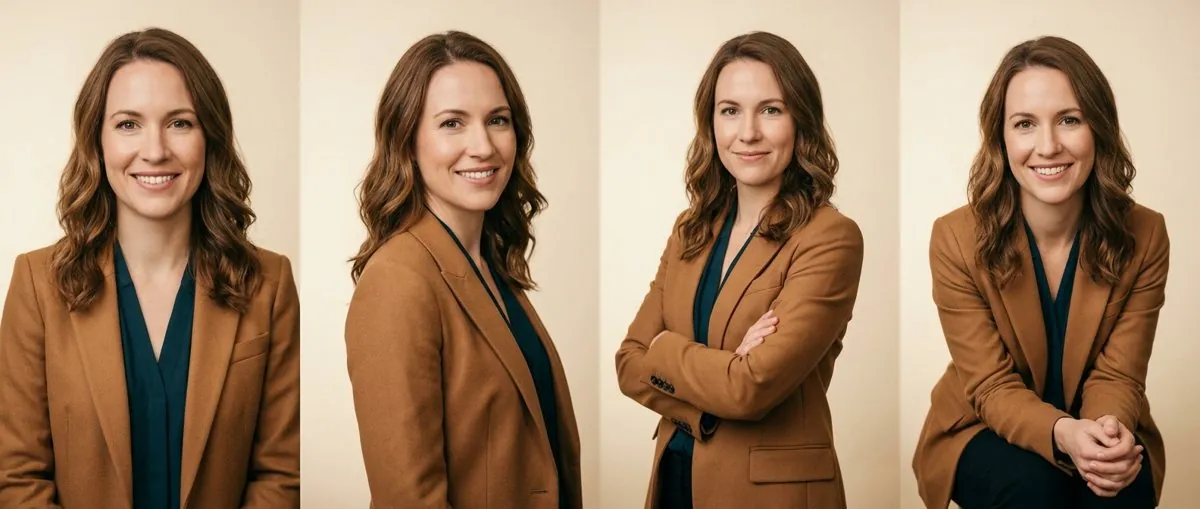
Most headshots are framed from the chest up, so posing comes down to three things: the angle of your shoulders, the position of your chin and your expression. Get those right and any of the 15 poses below will work. Each one comes with a short cue, the kind of line a photographer would say, so you can direct yourself or a friend.
All example photos in this guide are AI headshots we made to show each pose clearly on different people.
4 basics before you pose
- Angle the shoulders. A 20–30° turn away from the camera looks slimmer and less stiff than facing it square on.
- Forehead forward, chin down. Move your head slightly toward the lens and tip the chin a touch. It defines the jaw.
- Long neck, low shoulders. Imagine a string pulling the top of your head up, then let your shoulders fall.
- Camera at or just above eye level. Lower than that, and the viewer looks up your nose.
Standing headshot poses
Standing is the default for corporate and LinkedIn headshots: it keeps your posture upright and your clothes smooth.

1. Straight on
Shoulders square to the camera, chin level, weight even on both feet. The most formal pose, right for corporate pages and ID-style photos.Cue: “Stand tall, then let your shoulders drop.”
2. Three-quarter turn
Turn your shoulders about 30° away from the camera, then bring your face back to the lens. The most flattering pose for almost everyone.Cue: “Point your shoulder at the wall, nose at me.”
3. Chin out and down
Push your forehead slightly toward the camera and tip the chin down a touch. It sharpens the jawline and removes a double chin.Cue: “Turtle forward a little, then nod down.”
4. Slight head tilt
Tilt your head a few degrees toward your higher shoulder. It softens a straight-on pose and looks friendly without looking posed.Cue: “Tilt like you’re listening.”
5. Relaxed lean
Lean a little toward the camera from the hips, not the neck. It reads as engaged and confident.Cue: “Lean in like you’re about to share a secret.”
6. Arms loosely crossed
Cross your arms low and loose, hands soft on your upper arms, shoulders down. Needs a waist-up crop.Cue: “Hug yourself lightly, not tightly.”
7. Over the shoulder
Turn your back slightly to the camera and look back over your shoulder. Good for creatives and actors, too casual for most corporate use.Cue: “Walk away, then look back at me.”
8. Hands in pockets
Slide your hands into your trouser pockets up to the knuckles, thumbs out. Relaxed and easy for anyone who doesn’t know what to do with their hands.Cue: “Hands in pockets, thumbs out.”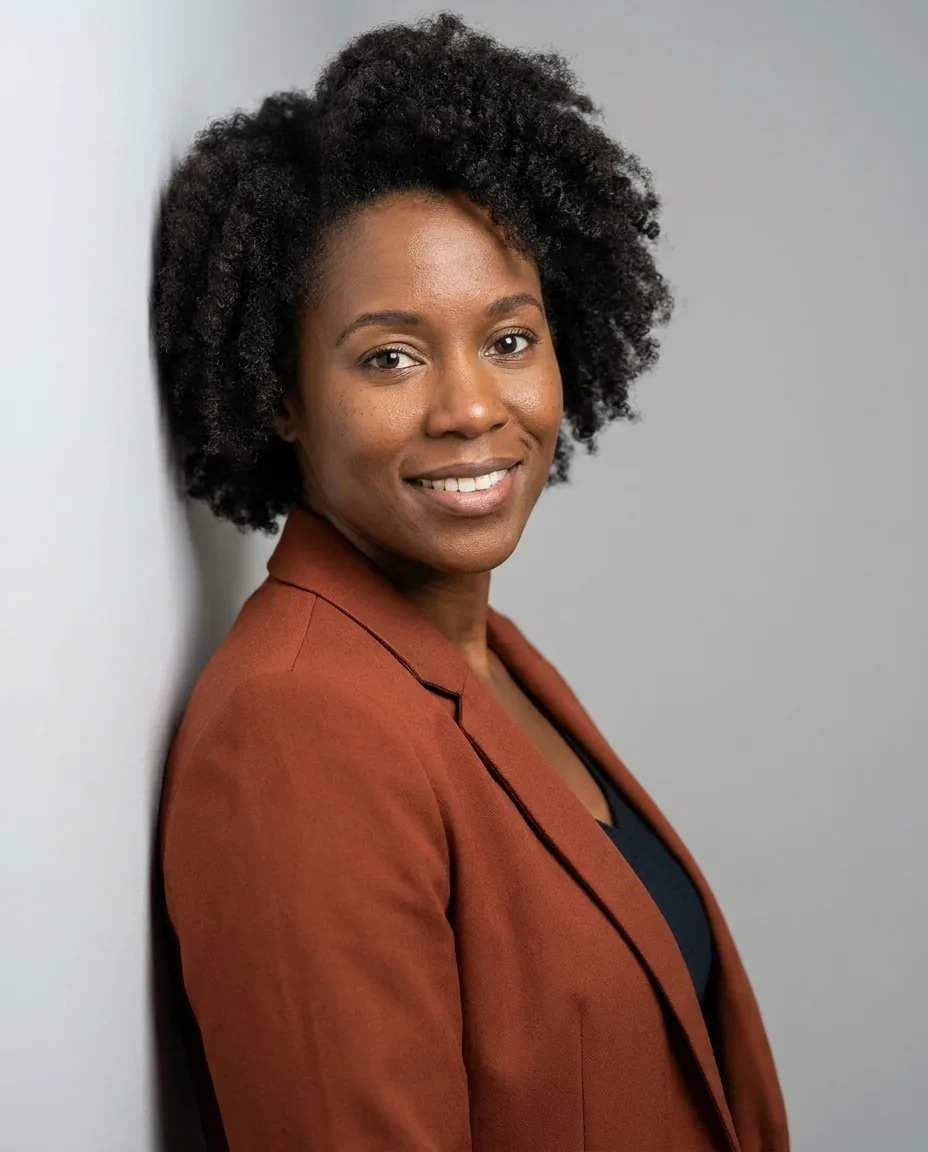
9. Shoulder against a wall
Lean one shoulder lightly on a wall and turn your face to the camera. The wall takes your weight, so your posture relaxes on its own.Cue: “Rest on the wall like you’re waiting for a friend.”
Seated headshot poses
Sitting relaxes most people. Sit on the front half of the chair, not against the back, or you’ll slump.

10. Seated, leaning forward
Sit on the front edge of a chair and rest your forearms on your knees. Warm and approachable, good for coaches and therapists.Cue: “Sit on the edge, elbows on knees.”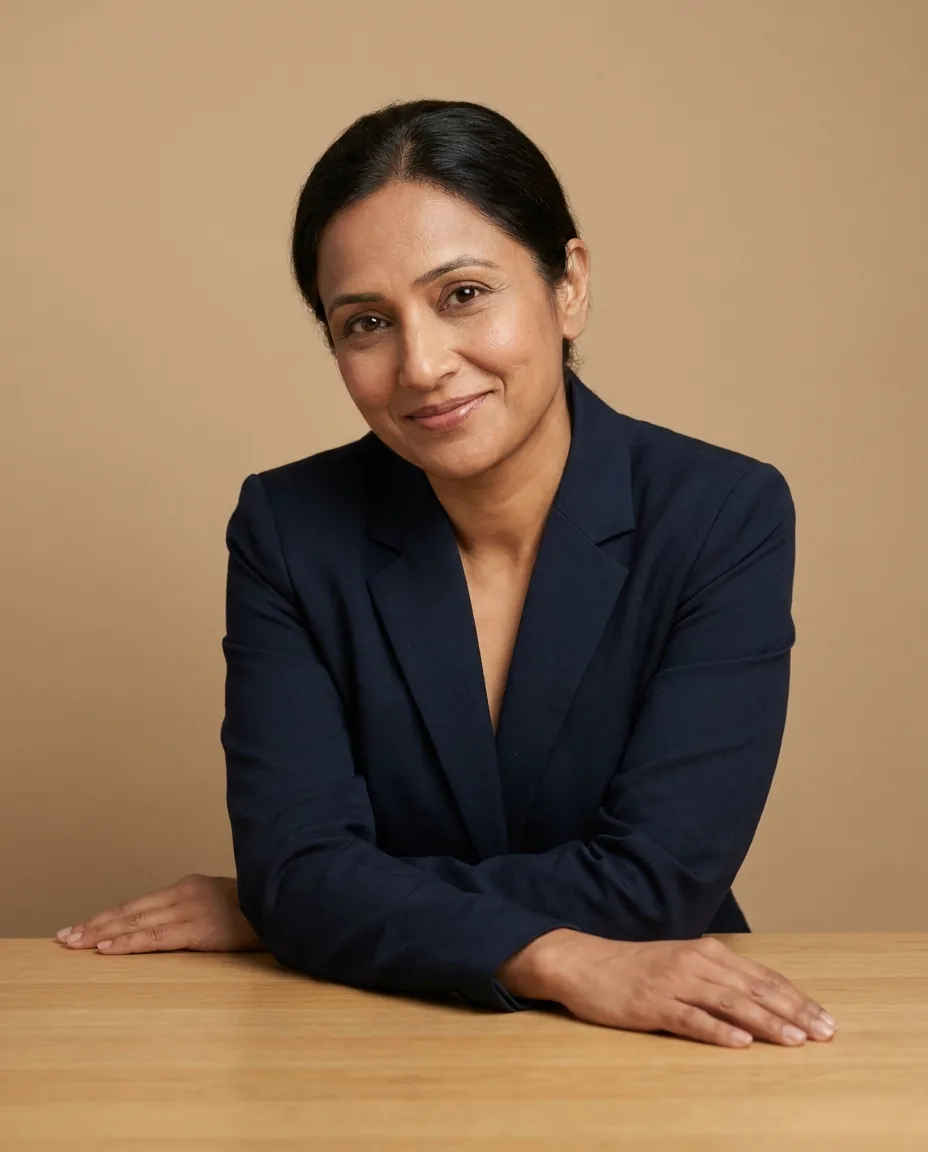
11. Forearms on a table
Sit at a table, rest both forearms on it and lean in slightly. It gives your hands a natural place and suits executive and author photos.Cue: “Lean on the table like you’re in a meeting.”
12. Arm over the chair back
Sit sideways on a chair and rest one forearm on the back, torso turned to the camera. Casual but put-together.Cue: “Turn the chair, rest your arm, face me.”
Headshot poses with your hands
Once the crop shows your hands, they need something to do. These three look natural because each is a real action.

13. Hand at the collar
Adjust a lapel or collar with one hand. It looks like a moment caught, not a pose.Cue: “Fix your collar, slowly.”
14. Hand near the chin
Rest a loose hand just under your chin, fingers curled, not pressing into your face. Thoughtful; best for writers, academics and consultants.Cue: “Think about a good question.”
15. Holding your glasses
Hold your glasses loosely in one hand at chest height. It gives your hands a job and adds personality.Cue: “Take your glasses off like you just finished reading.”
Headshot poses for women
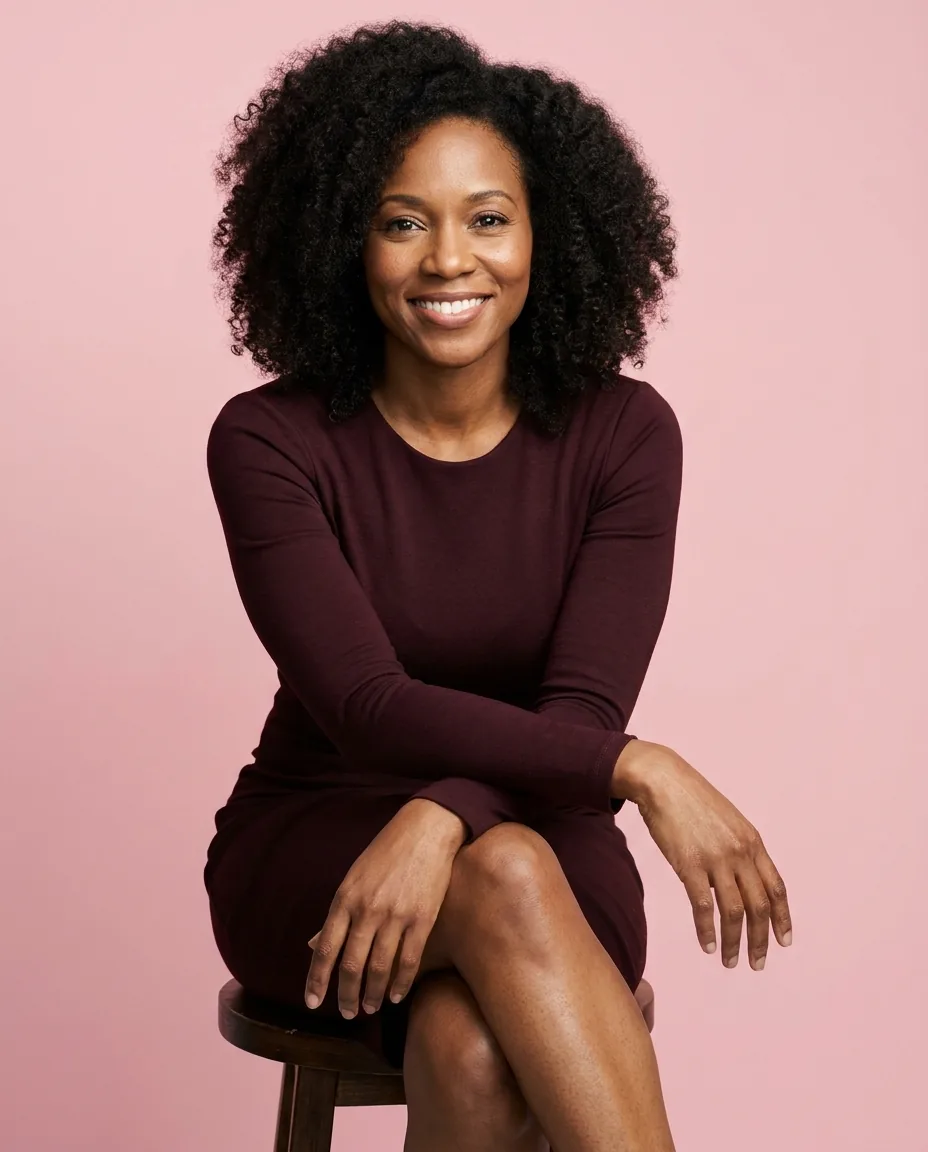
Try the three-quarter turn with your weight on your back foot, and leave a little space between your arms and waist so your outline stays defined. A slight head tilt (pose 4) softens a straight-on pose. Three more that work well:
- Hand on hip with space at the waist. Keep the elbow back so the arm doesn’t look like a wing.

- Hair brought forward over one shoulder, shoulders turned slightly. It frames the face and adds softness.
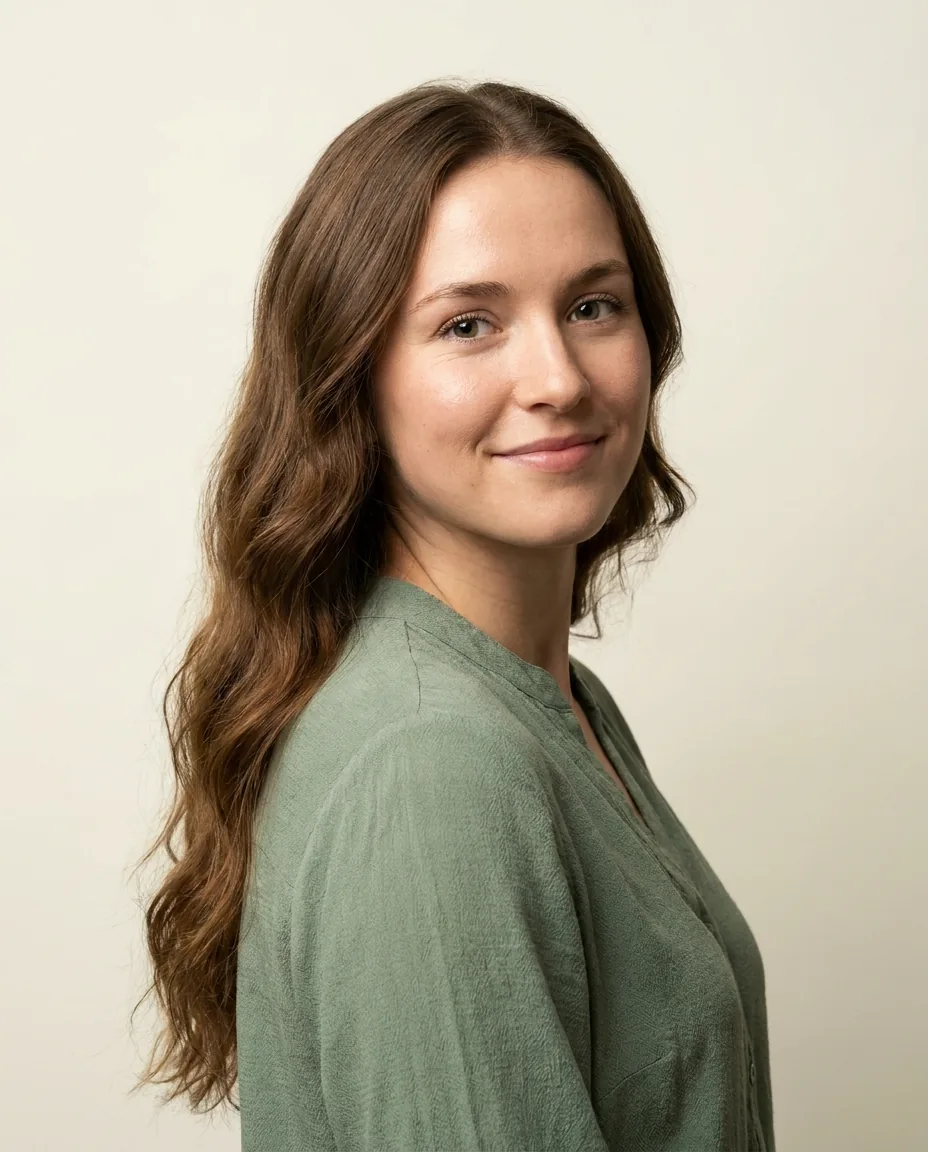
- Seated, legs crossed, hands resting on the knee. Lean forward slightly so the waist-up crop stays lively.
Headshot poses for men
Square or three-quarter shoulders read as confident. Lean slightly forward from the hips and keep your chin out; tucking it back is the fastest way to a double chin. Hands in pockets (pose 8) is the easiest standing pose for men. Three more:
- Buttoning the jacket. The classic “ready for business” move, and it keeps both hands busy.

- Adjusting a shirt cuff with the body turned three-quarters. Confident without being stiff.

- Hands loosely clasped at the waist, standing tall. Simple and friendly for casual roles.

What to do with your hands in a headshot
In a tight chest-up crop, nothing: let them hang loosely and they won’t show. In a waist-up crop, pick one of these and commit to it:
- Give them an action. Button a jacket, adjust a cuff or collar, hold your glasses (poses 13 and 15).
- Rest them on something. A table, your knee or the back of a chair (poses 10–12).
- Hide them. Pockets, thumbs out (pose 8), or arms loosely crossed (pose 6).
- Show the side of the hand, not the back. The edge of a hand looks slimmer and more relaxed in photos.
- Keep fingers soft. Clenched fists and stiff, flat fingers both read as tension.
Corporate and LinkedIn headshot poses
Stick to straight-on (pose 1) or a three-quarter turn (pose 2), chest-up, and use the same crop for everyone so the team page lines up. Save crossed arms and over-the-shoulder looks for marketing pages. For LinkedIn, the face should fill about 60% of the frame, because the photo is shown as a small circle. Team headshots can lock the pose and crop for everyone, and headshot backgrounds covers which backdrop suits each industry.
Expression matters most
A closed-mouth smile and a full smile both work. Narrow your lower eyelids slightly to look relaxed rather than wide-eyed, and breathe out just before the shot. If your smile starts to feel fake, look away, think of something funny, then look back at the lens.
Headshot poses to avoid
Most bad headshots come from tension, not from the wrong pose. These three are the most common:
- Chin pulled back: it creates a double chin and looks uncomfortable.
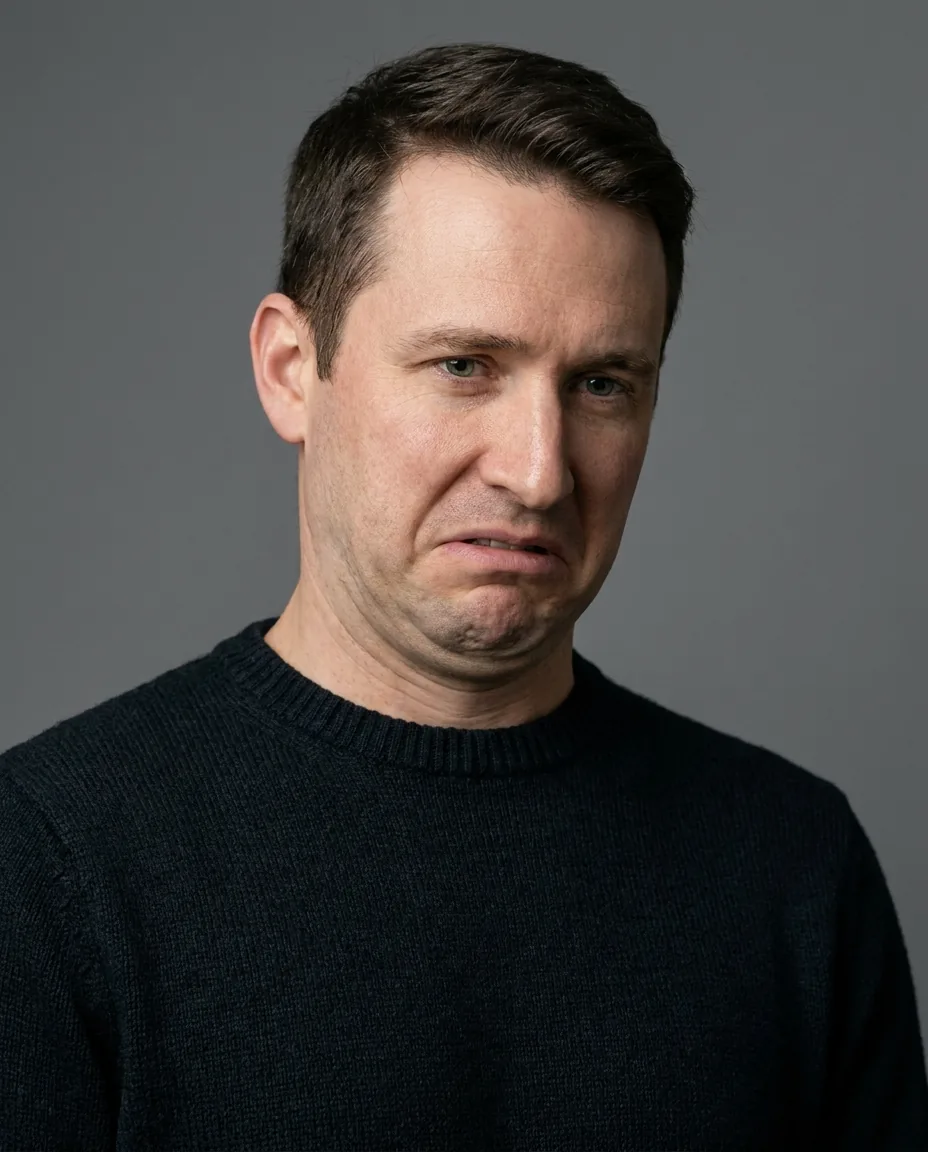 Avoid
- Shoulders raised and square: the neck disappears and you look tense.
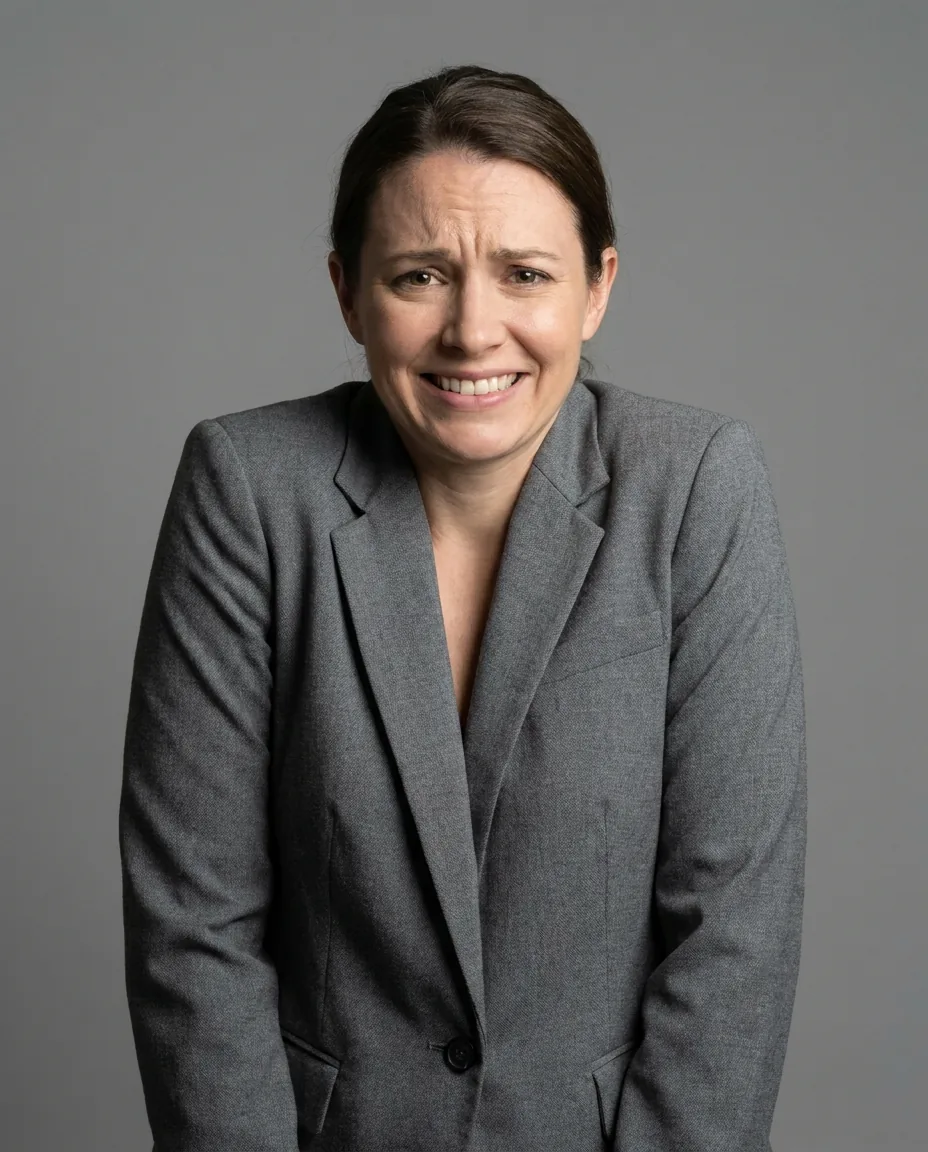 Avoid
- Camera below the chin: you look down at the viewer and show your nostrils.
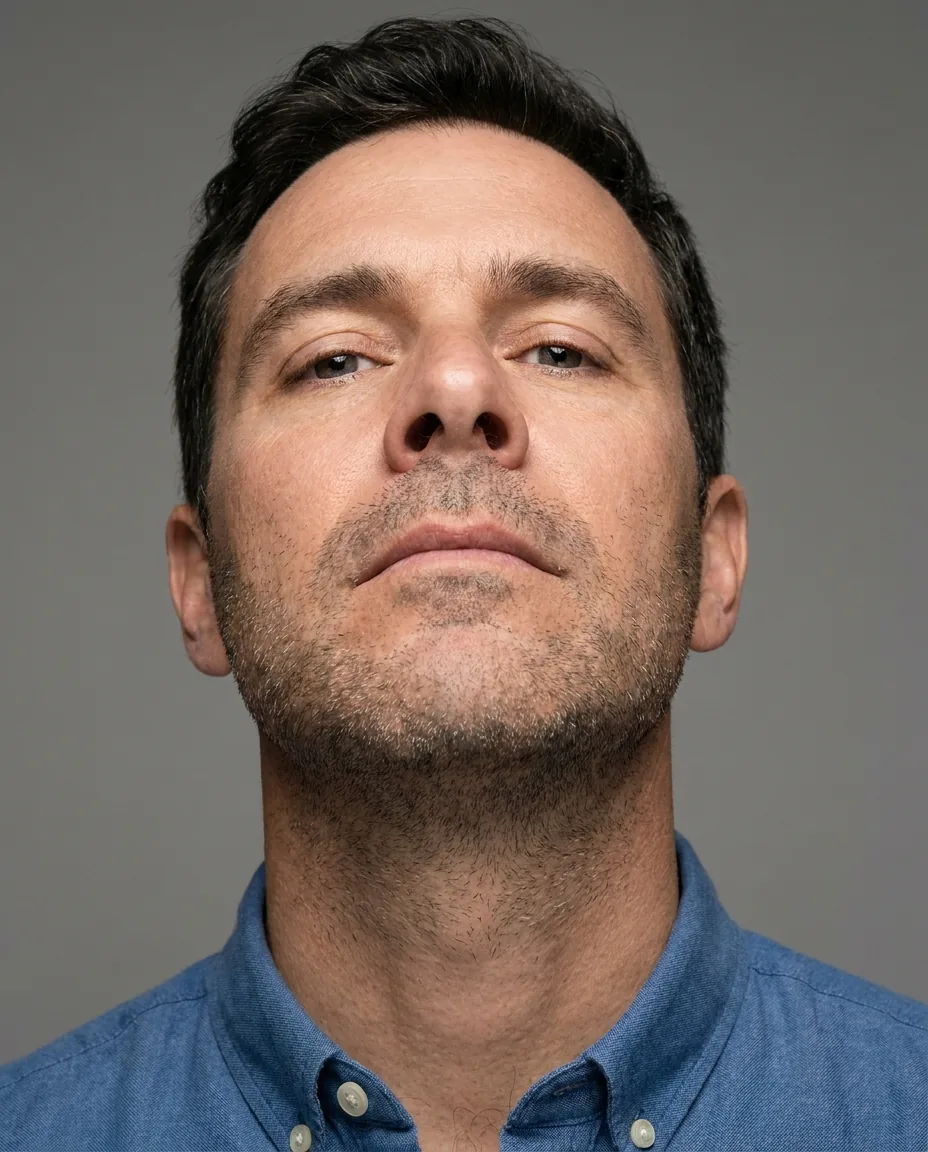 Avoid
- Hands that look placed. If a hand is in frame without a job, it looks pasted on. Give it an action or drop it out of frame.
- A frozen smile. Holding a smile for many shots makes it look forced. Relax between frames, breathe out, then smile again.
- Leaning back. Leaning away from the lens reads as distant. Lean a little toward it from the hips.
For posing, outfit, light and choosing the final photo in one list, see our 20 headshot tips.
Taking the photo yourself? Our guide to taking your own headshot covers light, framing and phone settings, and what to wear for headshots covers outfits. For finished photos in every style, see headshot examples.